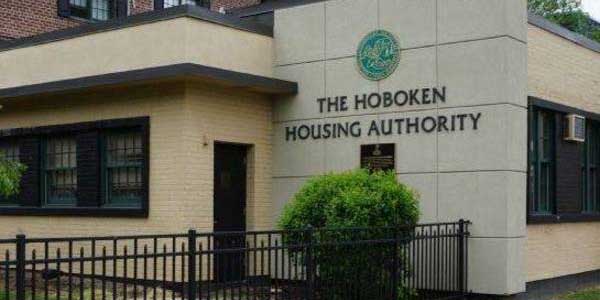
Attorney General Matthew J. Platkin and the Division on Civil Rights (DCR) today announced that DCR and the City of Hoboken have agreed to a settlement resolving a complaint alleging that a residency preference in Hoboken’s affordable housing program discriminated based on race in violation of the New Jersey Law Against Discrimination (LAD).
The settlement announced today resolves a DCR investigation regarding Hoboken’s Municipal Ordinance Amendment B-175, which was enacted in 2019 and grants current Hoboken residents preferential access to affordable housing. The Ordinance replaced a prior policy that gave affordable housing preference to residents of a broader four-county region (Hudson, Bergen, Passaic, and Sussex counties). DCR opened its investigation after a Black Jersey City resident filed a complaint with DCR alleging that she was not permitted to apply for an affordable housing unit in Hoboken despite having been on the waitlist for five years. Among other things, the complainant alleged that Hoboken discriminated based on race.
Hoboken has agreed to amend its Ordinance to no longer have a Hoboken-only residency requirement. As part of the settlement announced today, Hoboken will also provide relief to individuals who were previously denied or skipped over on the waitlist, and Hoboken has agreed to allocate an additional $30,000 for affordability assistance and other fair housing projects.
“Housing discrimination continues to deny too many New Jerseyans the opportunity to access safe, affordable housing. That’s why I have made combating housing discrimination a priority since day one,” said Attorney General Platkin. “The agreement announced today will make it easier for eligible low-income people to access affordable housing in a part of our state where rents are skyrocketing and affordable housing opportunities are at a premium. This settlement underscores our ongoing commitment to ensuring that affordable housing is available – free from discrimination – to those who need it.”
“Discrimination has no place in affordable housing policy. Ensuring equitable access to affordable housing is fundamental and a critical component of building inclusive communities,” said Yolanda N. Melville, DCR Director. “This settlement is a significant step forward in our mission to promote equal access to housing for all New Jersey residents. We are committed to continuing our work across the state to foster environments where everyone has the opportunity to live in safe, affordable homes, without facing any form of discrimination. We thank Hoboken for working with DCR to resolve this matter.”
In response to a complaint filed with DCR, DCR investigated whether Hoboken’s residency preference may have an unlawful disparate impact in violation of the LAD, which prohibits housing discrimination on the basis of race, national origin, and other protected characteristics. The LAD prohibits not only conduct that expressly treats people differently based on a protected class but also policies that have an unlawful disparate impact on members of a protected class. This latter form of discrimination is known as disparate impact discrimination. Under the LAD, policies or practices that are neutral on their face – for example, policies or practices that, like the residency preference at issue here, do not single out a protected class for differential treatment – may nonetheless violate the LAD if they have a disproportionate negative effect on members of a protected class.
DCR’s investigation raised concerns that Hoboken’s residency preference may have a disparate impact based on race because the policy has the effect of excluding residents of surrounding towns that are more racially diverse than Hoboken.
Under the settlement announced today, Hoboken has agreed to amend its Ordinance to eliminate the city-only residency preference, reverting instead to a preference for individuals and families within the COAH Region 1 counties (Hudson, Bergen, Passaic, and Sussex). Going forward, the city will apply this regional preference for any newly constructed units that help Hoboken satisfy its 2025 to 2035 affordable housing obligations in compliance with the Mount Laurel doctrine and affordable housing legislation.
The agreement announced today also commits Hoboken to taking the following steps to resolve this matter:
- Applicants previously denied or skipped on the waitlist because of Hoboken’s residency preference will have their prior waitlist position reinstated;
- Those removed from the waitlist for failing to complete annual recertifications may also seek reinstatement to the waitlist if they originally applied for affordable housing before this amendment to the Ordinance;
- Applicants who were previously skipped or removed will be screened for an opportunity to apply to an affordable housing unit, if otherwise eligible;
- Hoboken will allocate at least $30,000 to additional affordability assistance and other projects or training associated with fair housing; and
- All staff whose work relates to affordable housing administration will be required to complete training on housing discrimination laws.
The Agreement ensures that affordable housing in Hoboken will be made available to a larger and more diverse pool of applicants.
DCR is represented in this matter by Division of Law Civil Rights Section Chief Nancy Trasande and Deputy Attorneys General Douglas Praschak, Mia Dohrmann, and Geoffrey McGee, under the supervision of Assistant Attorney General Mayur Saxena and Deputy Director Sara M. Gregory of the Division of Law’s Affirmative Civil Enforcement Practice Group. DCR’s investigation was conducted by Deputy Associate Director Iris Bromberg and Investigator Charles Washington, under the direction of Acting Deputy Director James Michael and Associate Director Malcolm Peyton-Cook.
The New Jersey Division on Civil Rights enforces the New Jersey Law Against Discrimination, the New Jersey Family Leave Act, and the Fair Chance in Housing Act, and works to prevent, eliminate, and remedy discrimination and bias-based harassment in employment, housing, and places of public accommodation throughout New Jersey.
To find out more information or to file a complaint, go to www.njcivilrights.gov.